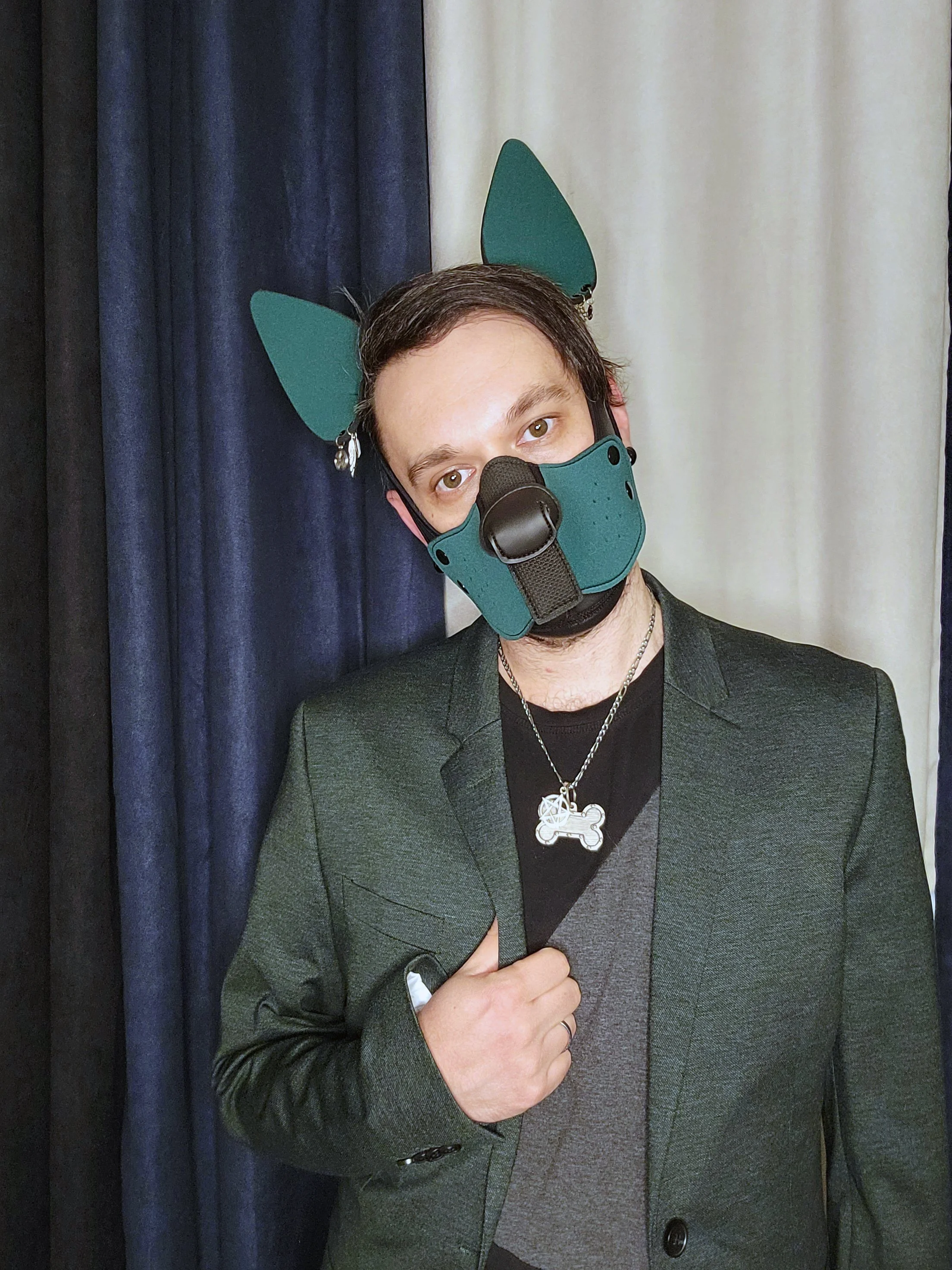
Hi ! I’m Wyccan Arcanis.
I make things. Always have.
Sometimes it’s fabric. Sometimes it’s art. Sometimes it’s an entire fictional household full of emotionally complicated men who moved into my brain and refused to leave.
Hearthkeepers is my first novel. It probably won’t be my last.
I’m not particularly interested in pretending to be mysterious, sophisticated, or professionally brooding beside a bookshelf. I’m just a guy with a weird mind, too many ideas, and apparently now an author page.
About my process
I have never had much trouble coming up with ideas. I can see a scene in my head, know where it begins and where it needs to end, understand what the characters are feeling and what I want the moment to mean. What I have always struggled with is the distance between those points: turning an idea into enough prose that getting from A to B feels like an experience rather than a summary.
I had tried writing before. The ideas were there, but I never found a process that allowed me to carry them far enough. Years later, I found myself with access to tools that simply did not exist when I made those earlier attempts. Generative AI did not give me the desire to write or the stories I wanted to tell. It gave me a way to bridge a part of writing that had always been difficult for me.
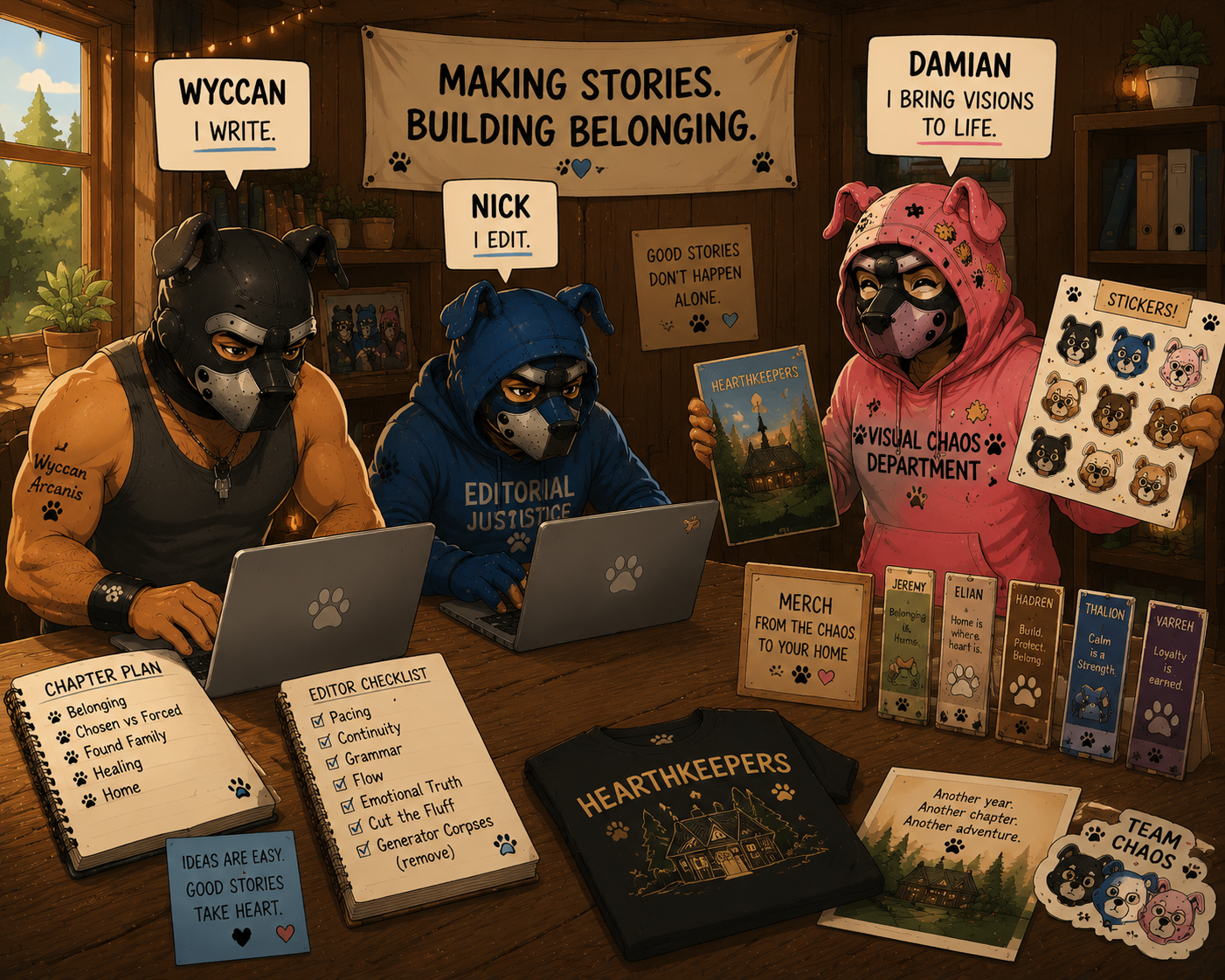
My work begins with ideas, characters and a sense of where I want their stories to go. From there, I develop them through conversation with AI. Some suggestions are exactly the little push I need. Some are rejected immediately. Others spark a completely different idea and disappear while the new one takes their place. We work back and forth until the bones of an idea have enough flesh on them to become something I can build from.
AI also helps me turn those plans into prose. That prose is another beginning, not an ending. I read it, cut it, change phrasing, rewrite passages and reshape scenes until they express what I am actually trying to say. Sometimes a generator gives me something I never considered and I love it. Sometimes what I have in mind is too precise, and I write it myself.
Once I am satisfied, AI becomes an editor and a reader: checking pacing, grammar, continuity and the occasional remnant left behind by generation—affectionately known as a “generator corpse.” I decide which criticism to accept and which to leave alone.
And sometimes I simply need someone to talk to about the work. Writing can be remarkably solitary. AI gives me somewhere to react, brainstorm, argue, get excited about an idea and occasionally spend far too long discussing fictional people as though they actually exist.
I don't pretend AI plays a minor role in my work. It contributes prose, ideas, feedback and countless hours of conversation.
But neither do I hand over an idea and wait for a story to come back.
I create, choose, reject, rewrite, change my mind, throw things away, discover better ideas along the way and decide when the work finally says what I wanted it to say.
For the first time, I have tools that work with the way I create rather than against it.
I don't create alone.
But what I create is mine.
And yes... AI helped me write this part too.